Working principle
The vibrator consists of an electromagnetic coil and an armature. When current is supplied, the coil's magnetic field pulls the armature, and the alternating supply makes it oscillate rapidly. These vibrations pass into the structure the vibrator is mounted on, helping material flow smoothly and consistently. Vibration force can be adjusted to suit the material and the process.
Typical uses
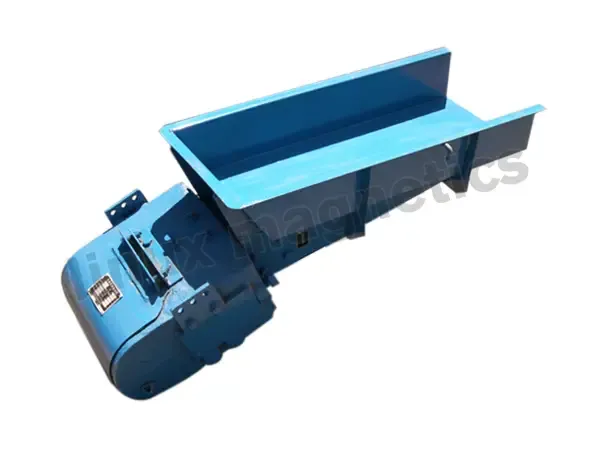
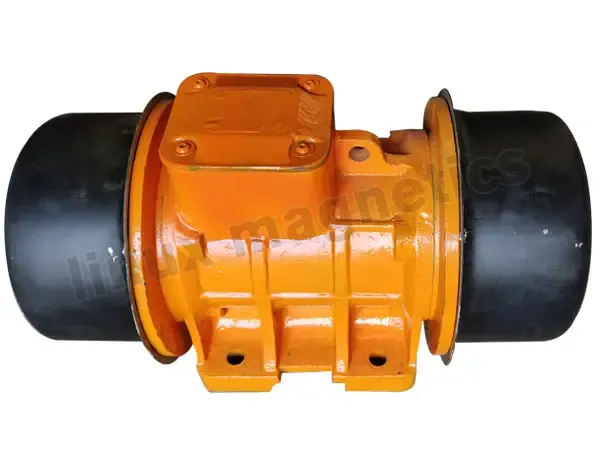
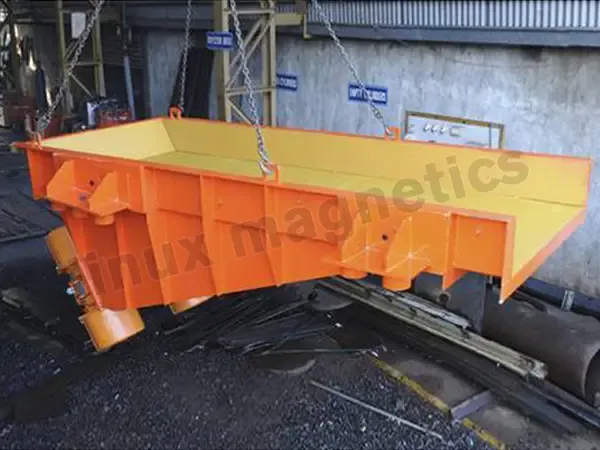
Vibrators are used on storage hoppers, discharge chutes and bins that handle powders and granules, and as the drive for small feeders. Where heavier vibration is needed over long periods, a vibratory motor may be more suitable.
Key features of our electro magnetic vibrator
- Electromagnetic coil and armature
- Adjustable vibration force
- Compact design
- Robust construction
- Easy installation
- Easy to maintain
- Customisation available
Applications & industries
- Hoppers & bins
- Discharge chutes
- Small feeders
- Packing lines
- Powder handling
- Foundry
Electro Magnetic Vibrator at a glance
| Drive | Electromagnetic |
|---|---|
| Mounting | Bolted to structure |
| Control | Adjustable force |
Exact dimensions, capacity and magnet strength are confirmed against your application before manufacture.
Need a electro magnetic vibrator for your plant?
Send your material, capacity and installation details for a quotation.
Frequently asked questions
What is the difference between an electromagnetic vibrator and a vibratory motor?
An electromagnetic vibrator uses a coil and armature with no rotating parts. A vibratory motor uses rotating eccentric weights and gives heavier, longer-stroke vibration.
Can vibration force be adjusted?
Yes, the force can be adjusted to suit the material and process.