How it works
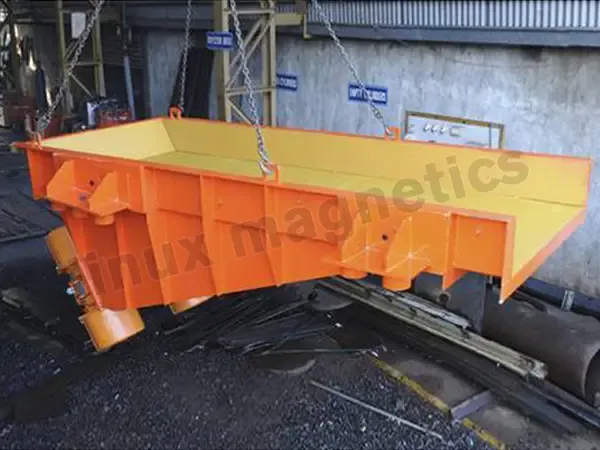
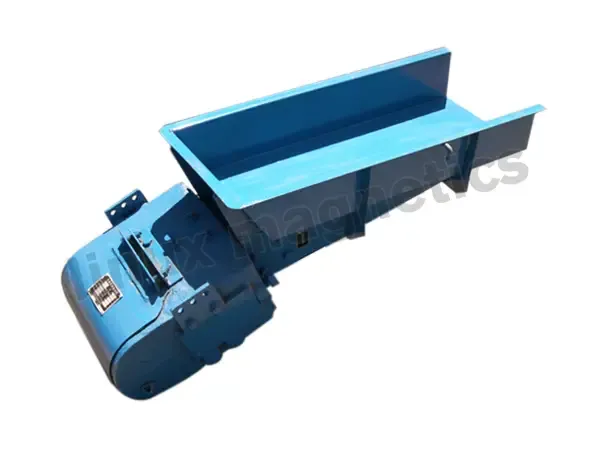
The feeder consists of a tray in mild steel or stainless steel and a body housing an electromagnetic drive. The drive vibrates the tray at a set frequency, and each stroke lifts the material slightly forward so it travels evenly along the tray. A controller adjusts the amplitude and therefore the feed rate. With the right deck slope, the feeder discharges large volumes from a hopper to keep up with the production rate.
Because the feeder works as a self-discharging extension of the hopper, it removes many of the interruptions that happen when materials bridge or will not flow from static hoppers.
Key features of our electromagnetic vibratory feeder
- Electromagnetic drive, no rotating parts in flow
- Controller for adjustable feed rate
- MS or SS tray
- Handles hot, damp, lumpy or dusty material
- Instant start/stop for dosing
- Low maintenance
- Compact
Applications & industries
- Feeding crushers & screens
- Weighing & batching
- Packaging machines
- Mixing & blending
- Drying, heating & cooling lines
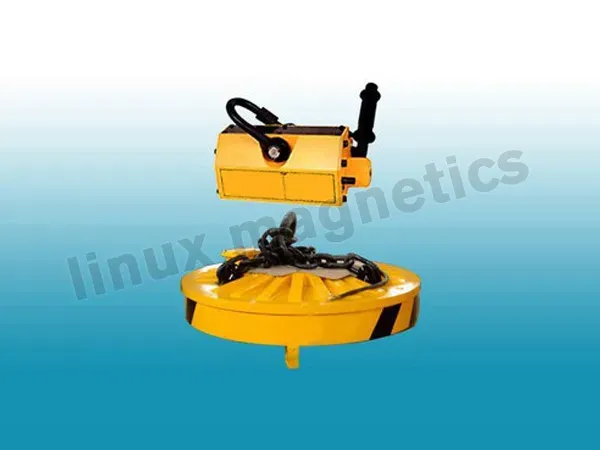
- Magnetic separator feeding
Electromagnetic Vibratory Feeder at a glance
| Drive | Electromagnetic |
|---|---|
| Tray | Mild steel or stainless steel |
| Control | Variable controller |
| Mounting | Suspended or base mounted |
Exact dimensions, capacity and magnet strength are confirmed against your application before manufacture.
Need a electromagnetic vibratory feeder for your plant?
Send your material, capacity and installation details for a quotation.
Frequently asked questions
What is the advantage of an electromagnetic feeder over a mechanical feeder?
Electromagnetic feeders offer precise, instantly adjustable feed rates and very quick start/stop, which suits dosing and weighing. Mechanical feeders handle heavier, larger tonnages.
Can it handle hot or abrasive material?
Yes, with a suitable tray material and liner.