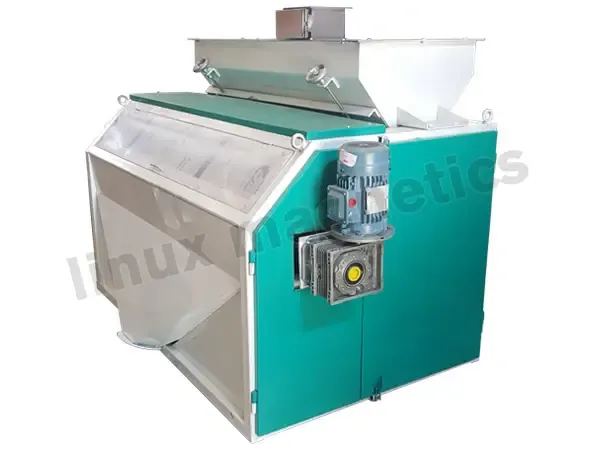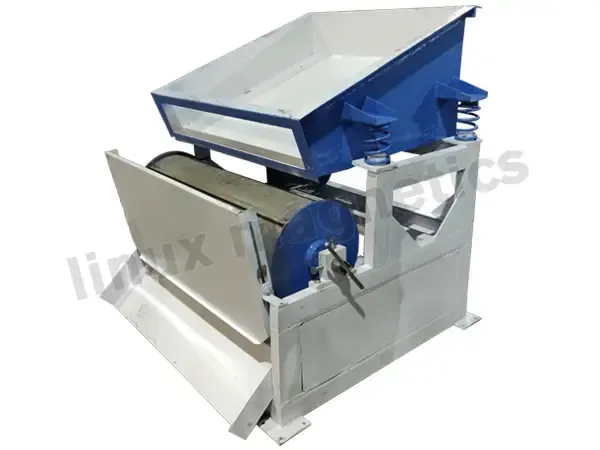
How a magnetic drum separator works
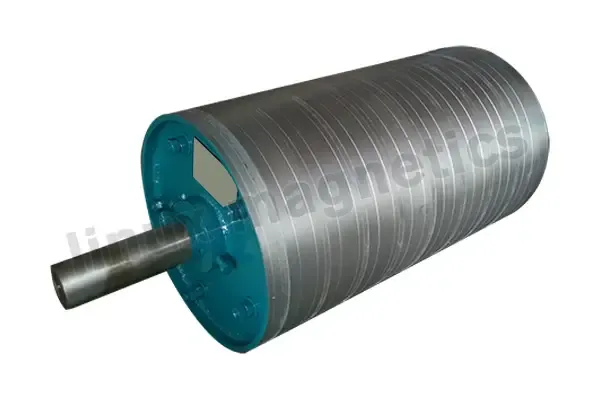
Inside a rotating non-magnetic shell sits a stationary, semicircular magnet assembly. Only about half of the drum circumference is magnetised. As material falls onto the drum at the leading edge of the magnet arc, iron particles are held against the shell and carried round. Clean product falls away freely. Once the captured iron passes beyond the magnet arc it drops off into a separate outlet, so the drum never has to be stopped for cleaning.
Because the field comes from a permanent magnet circuit, the drum needs no power for its magnetism. The intensity does not fall away in normal service. An electromagnetic version can be built where the customer's specification calls for it.
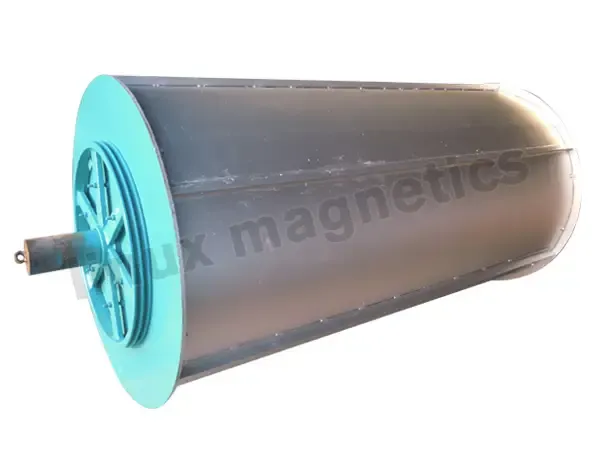
Magnetic drum or complete separator?
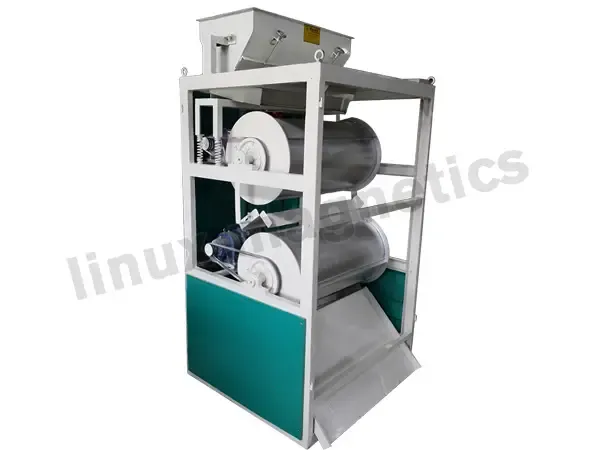
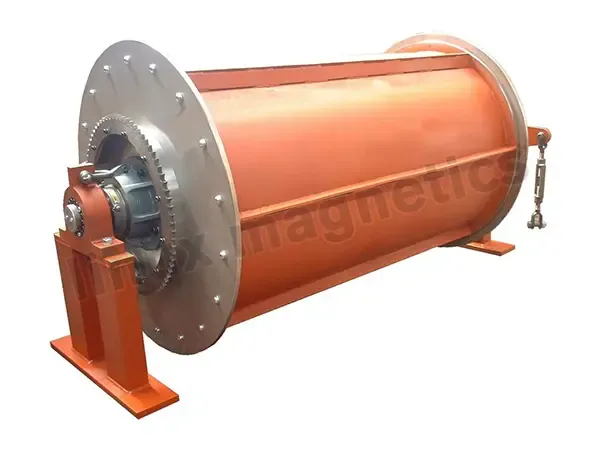
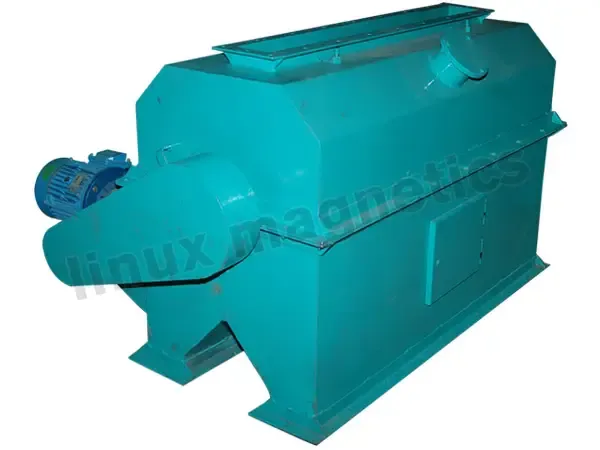
A bare magnetic drum suits OEMs and plants with their own feed arrangement. A complete separator adds a feed hopper, vibratory feeder or splitter, housing and separate clean and reject outlets. Drum diameter and face width are chosen to suit your tonnage and the size of the iron particles you need to remove.
Key features of our magnetic drum separator
- Continuous, self-cleaning separation
- Stationary permanent magnet with roughly 180° active arc
- Axial or radial magnetic circuit options
- High throughput for dry bulk solids
- Robust, corrosion-resistant shell
- Designed around available space
- Single, double or triple drum units
- Very low maintenance
Applications & industries
- Chemicals & pharmaceuticals
- Refractories & ceramics
- Foundry sand processing
- Native mineral cleaning
- Food products & grain
- Salt, sand & fertilisers
- Plastics & abrasives
- Glass & waste recovery
Magnetic Drum Separator at a glance
| Magnet | Ferrite or rare-earth permanent; electromagnetic on request |
|---|---|
| Shell | Non-magnetic stainless steel |
| Active arc | About half the drum circumference |
| Diameter / width | Made to suit capacity |
| Supply | Bare drum or complete separator with housing |
Exact dimensions, capacity and magnet strength are confirmed against your application before manufacture.
Need a magnetic drum separator for your plant?
Send your material, capacity and installation details for a quotation.
Frequently asked questions
What is the difference between a magnetic drum and a magnetic pulley?
A magnetic pulley replaces the head pulley of a belt conveyor and is fully magnetised. A magnetic drum has a stationary partial magnet inside a rotating shell and is fed by gravity or a feeder. That makes it self-cleaning and better suited to a high concentration of iron.
Can a magnetic drum separator handle fine iron?
Yes. Rare-earth magnet circuits are used where smaller ferrous particles must be removed from a high-throughput product stream.
Do you supply magnetic drums only?
Yes, we supply magnetic drums for integration as well as complete drum separator assemblies.