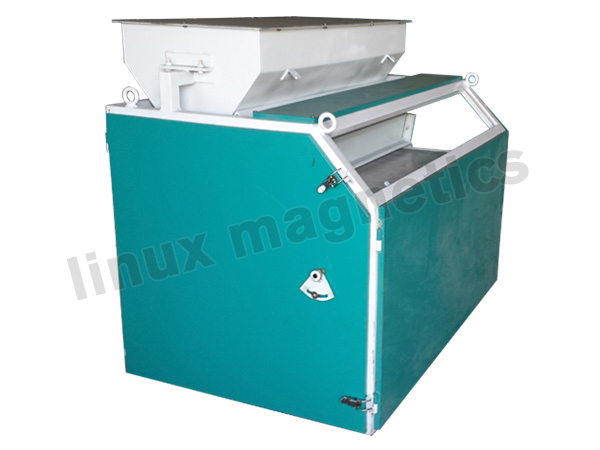
ROLLER MAGNETIC SEPARATORS

Roller type magnetic separators are specially designed to use in ceramics and minerals. In order to obtain equally finished material in ceramics and other likewise industries, these kinds of pulleys are used. Due to its high efficiency to remove contaminants of micro iron and para-magnetic objects from material it is used to get very effective results. To get more prominent results, double roller separator, triple roller separator and multi roller separator are used.

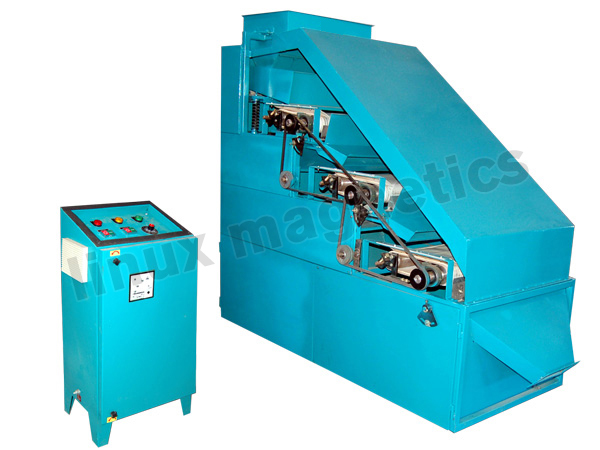
In double roller separator, material is subject to pass through the magnet twice with specific arrangements of the production line equipments. We offer high intensity magnetic roller separators that contain highly efficient rare earth neodymium permanent magnetic rollers.

Our offered rollers are available with different size and shapes. We also offer total customization as per requirements. We offer completely dust tight equipments with different stages. We offer one to eight stage roller magnetic separators with varied size. On requirement of highest purified raw material, several industries use triple and multi roller magnetic separators. It is attached to hopper and effectively removes ferrous contaminants from material.

Features :-

  • Easy to install
  • Total customization available
  • Different stage roller magnetic separator
  • High intensity magnetic field
  • For efficient magnetic field gradients, rare earth neodymium permanent magnetic roller assembly is applied

High-Gradient Mineral Separation with Roller Magnetic Separators

Roller magnetic separators (commonly called roll separators) are high-intensity, high-gradient dry magnetic separators specifically developed for treating weakly magnetic particles or fine minerals. The system utilizes a very thin conveying belt passing over a high-power magnetic roller made of alternating neodymium iron boron discs and steel pole pieces. As raw material is fed onto the moving belt, weakly magnetic contaminants are drawn to the roller and fall behind a splitter plate, while non-magnetic minerals are thrown forward cleanly.

Our permanent magnetic roll separators are fabricated with premium dust-tight housings and are available in single, double, triple, or multi-stage designs. By passing the material through multiple separation steps, these rollers achieve unmatched purity levels. They are widely used in refining silica sand, quartz, feldspar, alumina, pharmaceuticals, and ceramics, protecting process lines and ensuring the highest standards of final product quality.

FAQs About Roller Magnetic Separators

1. What is a roller magnetic separator used for? + It is used to extract weakly magnetic contaminants (such as paramagnetic iron oxides or mica) from fine minerals, ceramic clays, and chemical powders that standard separators cannot capture.
2. How does a high-intensity magnetic roll separator work? + A thin Kevlar belt conveys material over a high-intensity magnetic head roller. The magnetic field draws weakly magnetic particles, causing them to cling briefly to the belt and fall into a separate discharge chute behind a splitter.
3. Why is a thin conveyor belt used in roller separators? + A thin belt (usually 0.1mm to 0.5mm thick) ensures the material is extremely close to the magnetic roller surface, maximizing the magnetic force and gradient acting on the particles.
4. What is the difference between single and double roller separators? + A single roller separator processes the material once, while a double roller separator routes the cleaned material over a second magnetic roller to extract any remaining fine contaminants, improving separation purity.
5. Which industries rely on roller magnetic separators? + They are heavily used in silica sand purification, glass manufacturing, quartz mining, ceramics body preparation, abrasive manufacturing, and refractory industries.
6. What customizations are available for magnetic rollers? + We customize roller diameters, lengths, multi-stage configurations (up to 8 stages), belt speeds, and feed rates based on your material characterization and output capacity.